What Is FYT's Technology Advantage? Full-Stack In-House Development Explained
In this industry, most platforms are assembled in a remarkably similar fashion. An operator selects a white-label solution provider, purchases a turnkey system, applies its own branding, and goes live. The model is fast, the barrier to entry is low — but it also means the platform's core technology never truly belongs to the operator.
FYT chose a fundamentally different path.
From the very beginning, FYT made a defining decision: build the entire system in-house. Front-end applications, back-end service architecture, data infrastructure — every layer was constructed from scratch by an internal engineering team. No outsourcing, no patchwork assembly, no dependency on third-party codebases.
This was not the easy choice. Building a full technology stack costs several times more than licensing a white-label solution, demanding sustained investment in engineering talent and a long-term commitment to research and development. But for a brand whose identity is built around serving VIP customers, it was the only choice that could guarantee the quality floor those customers expect.
How Does In-House Development Differ from Third-Party Platforms? Security & Efficiency
The first layer of value that in-house development delivers is security.
When a platform depends on third-party systems, every external component becomes a potential vulnerability. Vendor code updates, API changes, security flaws — a problem at any single point in the supply chain can cascade across the platform. Full-stack ownership means the codebase is entirely controllable, the attack surface is dramatically reduced, and data protection standards are defined internally rather than inherited passively from a vendor.
For VIP customers who place a premium on privacy and the security of their funds, this is not a technical footnote — it is the foundation of trust.
The second layer of value is efficiency.
Under a self-built architecture, any feature optimization, performance tuning, or new product launch does not require waiting for a third-party vendor's development queue. The internal team can begin development the same day a need is identified and push it live when the quality bar is met. Deep integration between front-end and back-end eliminates the latency and compatibility issues that plague cross-system interfaces, allowing the entire platform to operate with the precision of a single, unified machine.
What Product Categories Does FYT Offer? Seven Verticals Under One Roof
Sportsbook is FYT's core specialty, but VIP customers rarely confine their entertainment interests to a single vertical.
On the FYT platform, customers move seamlessly across seven major product categories:
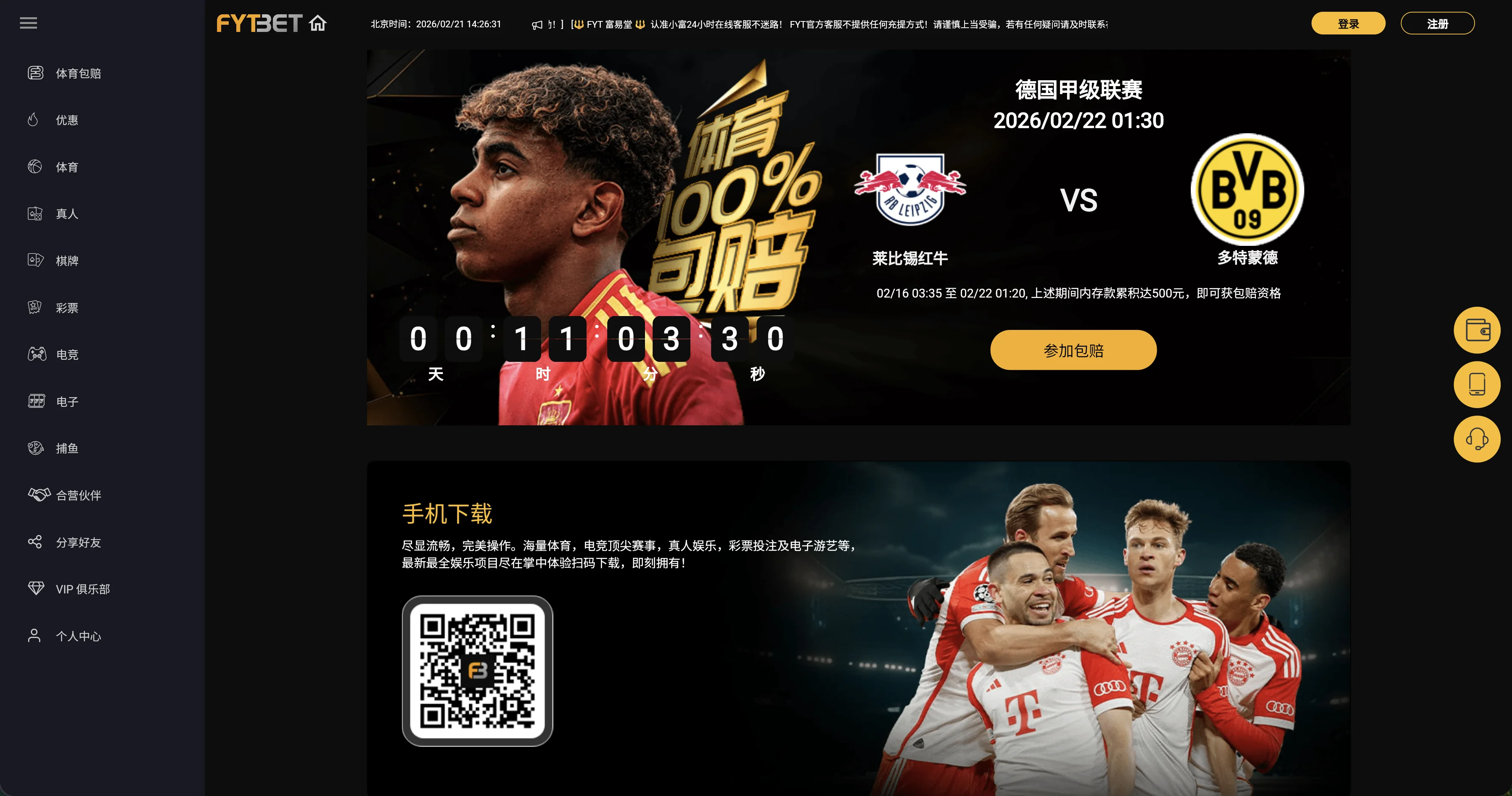
- Live Casino — AG Group, BBIN, and BG provide three distinct live dealer experiences, covering baccarat, dragon tiger, roulette, and other classic table games
- Slots — Pocket Games (PG), Microgaming, and Pragmatic — three of the industry's leading slot providers, spanning classic reels to cutting-edge video slots
- eSports — InPlay Matrix eSports betting, covering League of Legends, DOTA2, and other major competitive titles
- Chess and Card Games — Kaiyuan (开元棋牌) and GM deliver authentic Chinese card and mahjong game experiences
- Lottery — TC Lottery and BBIN Lottery, offering multiple game types and draw frequencies
- Fish Hunter — PA Fish Hunter and BB Fish Hunter, the perennial favorite for casual gaming
All categories share a single account system and fund pool — no switching between platforms, no inter-platform transfers. This depth of product coverage under one roof ensures that whatever a VIP customer's entertainment preference may be, they will find a top-tier provider for it within FYT.
What Payment Methods Are Supported? Seven Channels from USDT to e-CNY
The payment experience is one of the most immediately felt touchpoints in a VIP customer's journey. The speed, convenience, and flexibility of deposits and withdrawals directly shape a customer's sense of trust and willingness to engage.
FYT has constructed an unusually broad payment infrastructure spanning seven channels:
- USDT — Cryptocurrency payment, enabling fast cross-border transactions with strong privacy characteristics
- Digital Chinese Yuan (e-CNY) — China's official central bank digital currency, representing state-level financial infrastructure
- Alipay — China's leading mobile payment platform
- WeChat Pay — The social payment ecosystem reaching over a billion users
- GBPay — Third-party payment platform
- EBpay — Third-party payment platform
- Bank Transfer — Traditional banking channel, stable and reliable
From USDT on the blockchain to e-CNY issued by the People's Bank of China, from mobile payment giants to conventional banking — the significance of this payment matrix is straightforward: regardless of how a customer prefers to manage their funds, FYT provides native support rather than asking the customer to adapt to the platform's limitations.
How Was Fortune Insurance Developed? The Ultimate Proof of In-House Capability
If a single product could demonstrate the value of self-built technology, Fortune Insurance (富贵保) would be the most compelling exhibit.
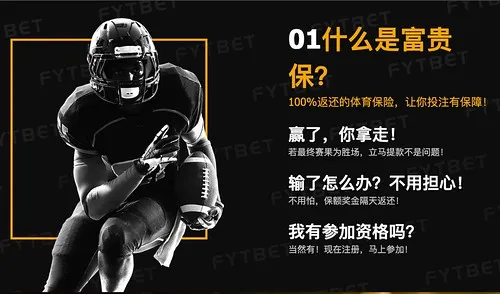
Fortune Insurance is FYT's proprietary creation — a 100% sports betting insurance product. The mechanics are elegantly simple: if you win, you keep the winnings in full; if you lose, the insured amount is returned to you the next day.
Behind this deceptively simple concept lies a sophisticated architecture of risk control models, real-time odds calculation, and fund settlement logic. It demands deep, fluid coordination between the front-end, back-end, risk management systems, and payment infrastructure — if any one of these layers depended on a third party, this kind of innovation would be either impossible or prohibitively inefficient.
It is precisely because the full technology stack is in FYT's own hands that the product team could take an idea from concept to production without being constrained by any external technology boundary. Fortune Insurance is not merely a popular product feature — it is living proof that in-house development translates directly into the ability to create things that no one else in the market offers.
Why Is Full-Stack Development a Competitive Moat? A Decade of Sustained Investment
Across the entire industry, platforms that choose to build their full technology stack in-house are a decisive minority.
The white-label model dominates the market for logical reasons: it is more economical for operators, faster to deploy, and lower in risk. But its cost is uniformity. Every platform running on the same white-label solution is functionally near-identical at the infrastructure level. Features converge, experiences homogenize, and price competition becomes the only remaining differentiator.
FYT's self-built approach means it competes on an entirely different axis. While competitors wait for their vendor to roll out a feature update, FYT's internal team is already testing the next iteration. When the industry faces a security threat, a self-built platform can deploy a patch within hours, while white-label operators queue for the vendor's consolidated fix.
This kind of technological sovereignty is not built overnight — it is the cumulative result of more than a decade of continuous investment. And it is precisely this long-term, compounding technical foundation that forms FYT's deepest moat in the VIP market. In an industry where most operators rent their technology, FYT owns every brick in the building.